

These quotes reflect the real experiences of women in Aotearoa New Zealand living with surgical menopause (Surgical Menopause NZ Trust, 2022–2023; Menodoctor, 2022–2023).
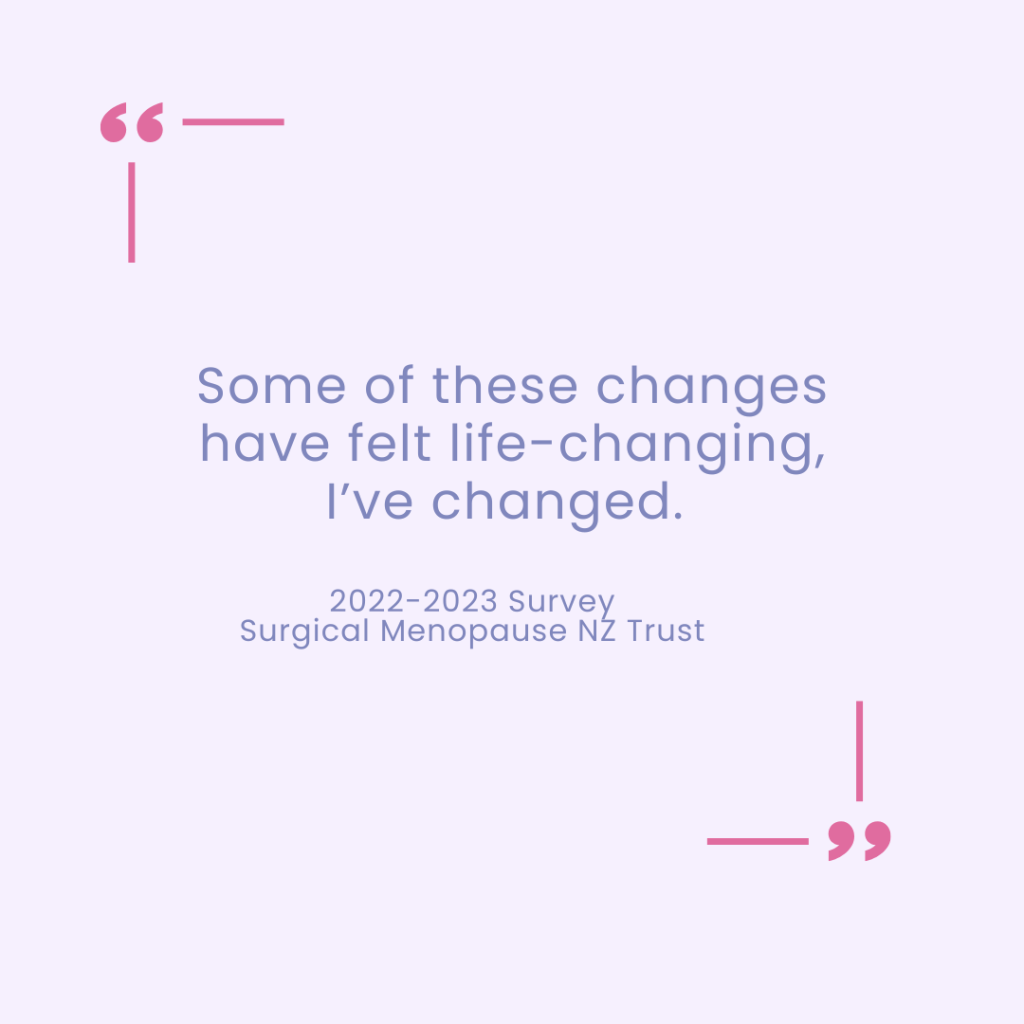
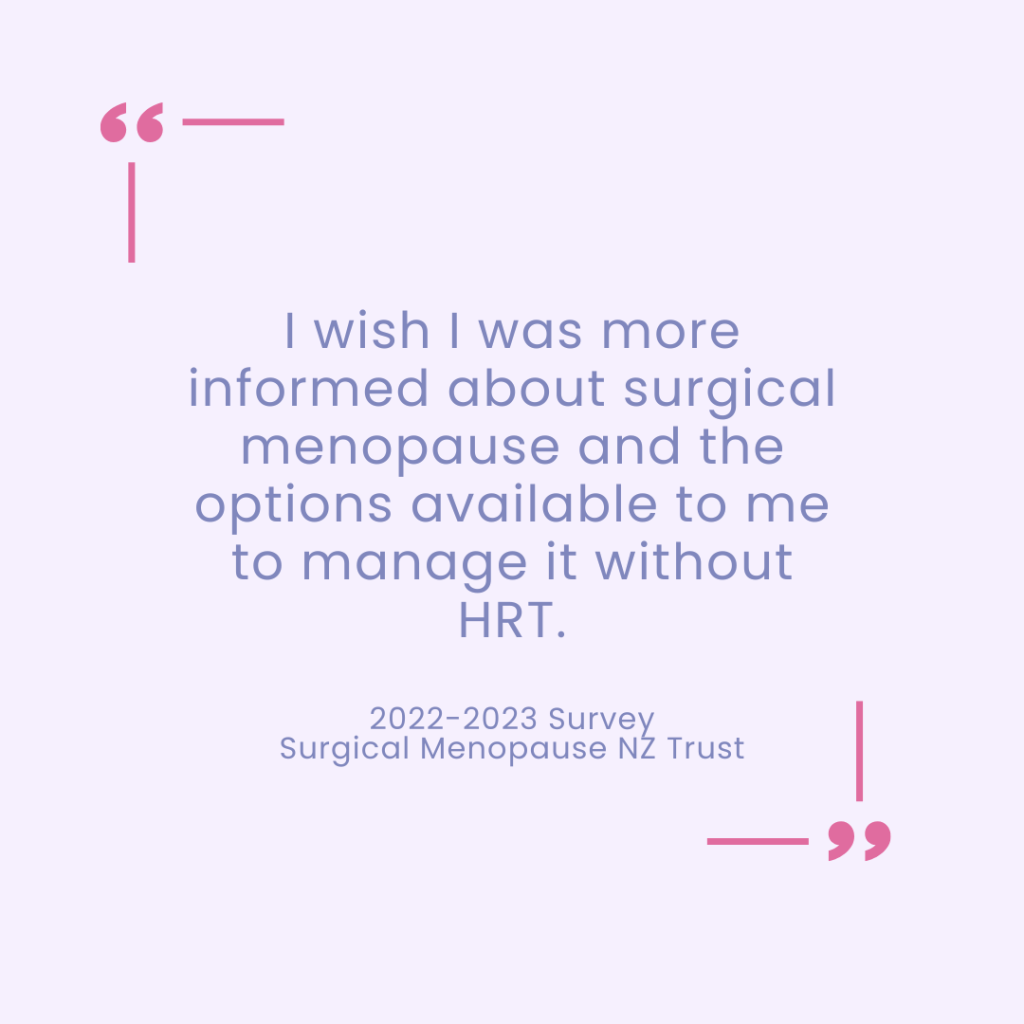

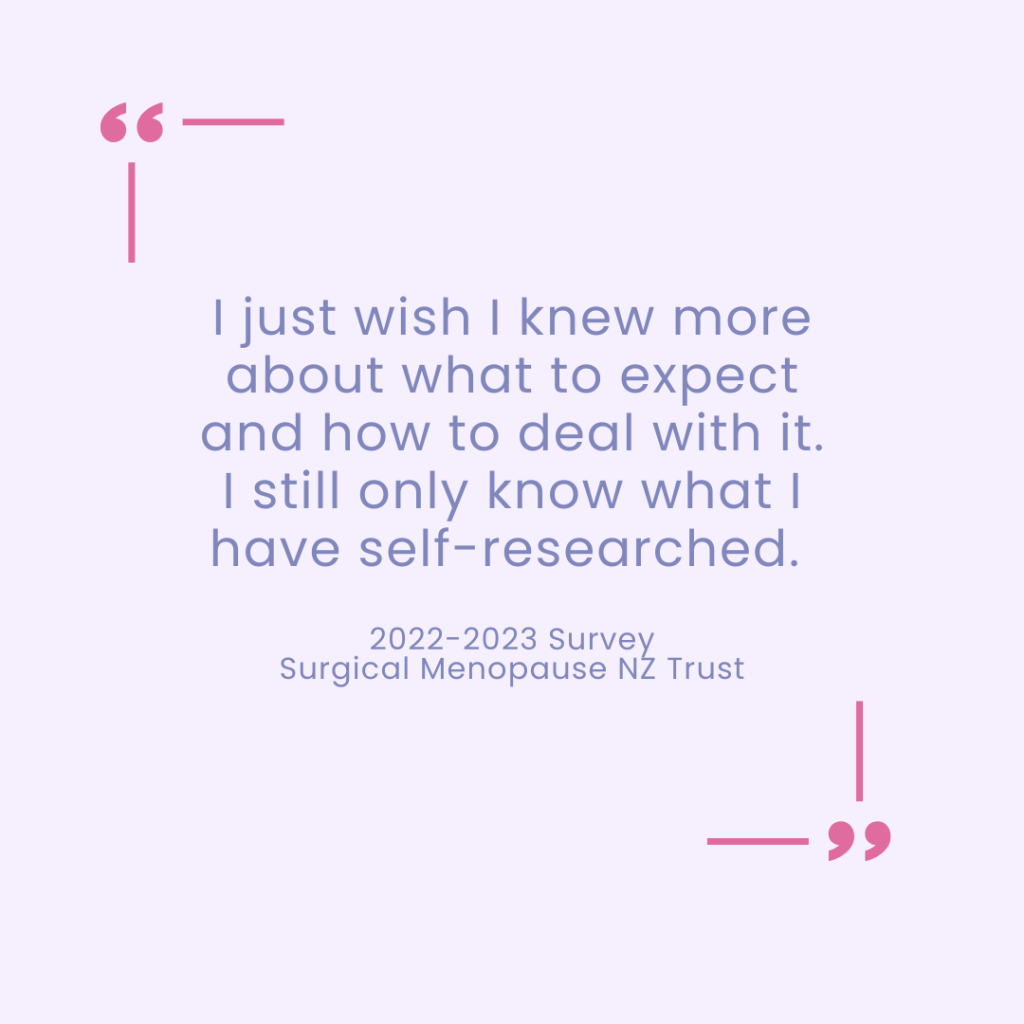

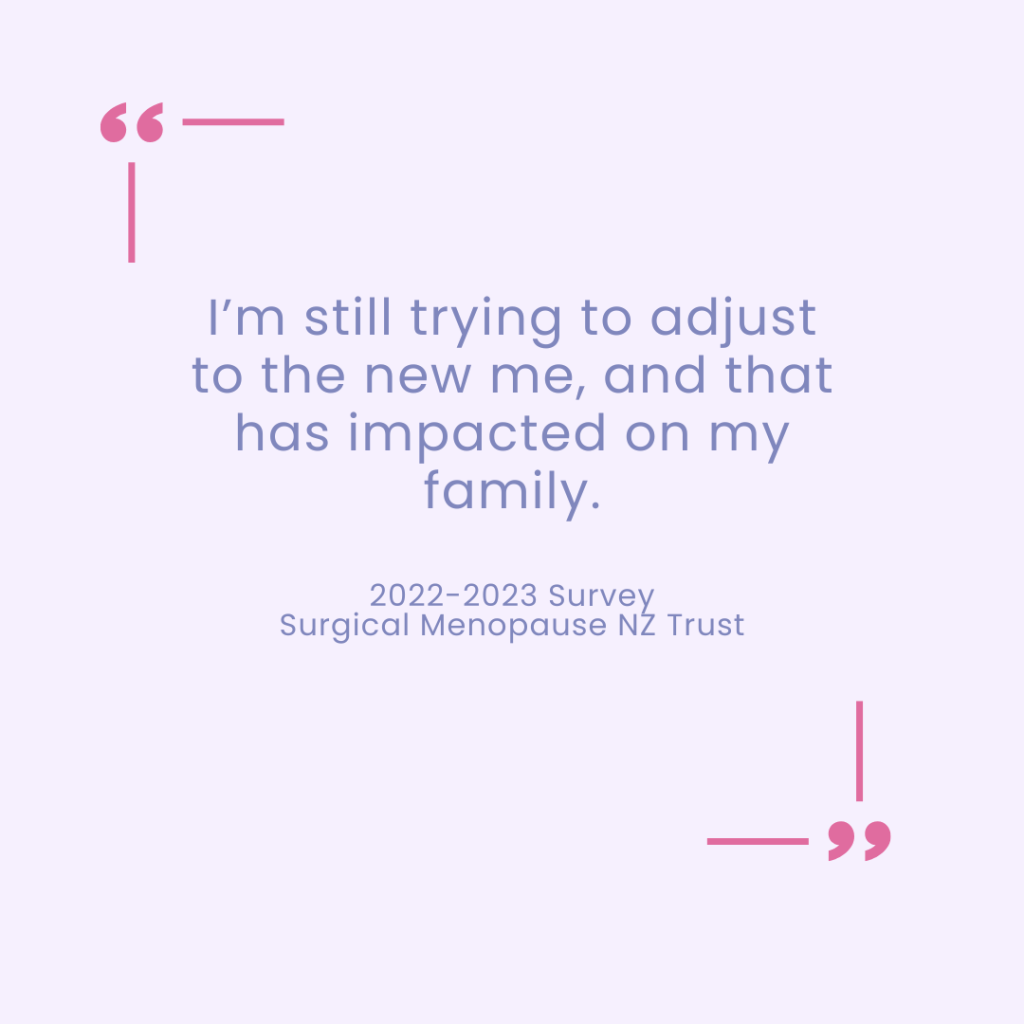


Through reading the lived experiences shared by women on various support groups we started to understand not only that we weren’t alone but also that there was a lot that needed addressing in the care of surgical menopause.
Here is the beginning of a little collection of stories from New Zealand women. We hope this helps wherever you are on your journey. The stories will be added as they come. If you feel like sharing yours, read below or contact us at info@surgicalmenopause.org.nz.
Stories
Emilie’s Story
I have a complicated relationship with my body. Over the years, it accumulated trauma and often didn’t feel like it truly belonged to me. At 39, escalating health problems led me to seek help from my GP. My periods had always been heavy and painful, but now I was experiencing pain and bleeding outside my cycle, as well as during and after sex, along with frequent bladder and bowel issues. An ultrasound triggered a chain of events that led to a life-changing diagnosis. Within a few months, I went from being diagnosed with endometriosis to facing the possibility of early-stage ovarian cancer.
Just a month after my 40th birthday, I underwent major surgery that plunged me into surgical menopause overnight. They removed my uterus, cervix, fallopian tubes, ovaries, and other significant parts. I spent almost two weeks in hospital due to complications.
Post-surgery, I was diagnosed with widespread precancerous seromucinous tumours on both ovaries, alongside endometriosis and adenomyosis. Knowing it wasn’t full-blown cancer left me with mixed feelings. I was relieved not to need further treatment – recovery had already been extremely difficult – but I was suddenly in menopause with severe symptoms and no “cancer survivor” label to validate the magnitude of what I’d been through.
My surgeon told me these tumours could have taken another 10 to 15 years to develop into full-blown cancer, essentially my natural perimenopause period. While I understand that postponing surgery likely would have worsened symptoms and increased risks, I still feel robbed of those years. Years when I could have stayed in my natural (bumpy) hormonal state, adjusted gradually, and had more time to feel like myself. The difficult truth is that we didn’t know the full diagnosis at the time – not me, and not my surgeon either.
Waking up in surgical menopause was a physical and emotional shock. I had to grieve multiple losses: the chance to be a mother, the body I once had, the natural ageing process. My symptoms were intense, yet no one explained the differences between natural and surgical menopause, or the daily reality of losing my ovaries. I felt completely unprepared.
The lack of post-surgery support only made things harder. My treatment journey has been far from smooth. After waiting on biopsy results, I was started on a 25 mcg patch – far too low for someone my age. Estrogen helps wounds heal, so after such extensive surgery, it made no sense to be deprived of that support. I was given no clear guidance on how or when to increase the dose, whether I could add progesterone despite not having a womb, or if testosterone might help. I spent weeks anxiously waiting between follow-ups, every appointment becoming a stressful challenge as I tried to get through my long list of questions and requests just to feel a little better. I’ve had to constantly advocate for myself: for tests, scans, referrals, and treatment adjustments. I needed a roadmap. There was none.
Surgical menopause felt like being thrown into the deep end. Add the hormonal impact on my body and mind, and it became an overwhelming battle just to be heard in a system that overlooks women’s health.
I went through this as a new resident of Aotearoa New Zealand. With my family in Canada, I had no in-person support – just much-appreciated video calls and messages from afar. That isolation added another layer of emotional toll to an already life-altering experience.
This project is my way of healing and of speaking out for others who need support. Through it all, I’m learning to be kinder to the body that has carried me through. It’s a work in progress.
Rachelle’s Story
When my periods first started I had a lot of pain issues, my GP at the time put me on the pill at 13 years old and that helped, but I found I couldn’t skip more than one period without causing more issues. When I was 20, I had a laparoscopy to check for endometriosis; at that time they told me they didn’t find any endo, but they did slip with the scalpel and cut through my uterine wall. A couple of months later I started having regular IBS-D symptoms in addition to the painful periods. This continued for the next 24 years which also included marriage and two sons.
In 2015 I had issues with rectal bleeding, but only during my period, a colonoscopy showed “unusual mucosal folds”, an MRI picked up that my fallopian tubes were blocked with endometriosis, which was diagnosed as stage IV from the imaging, and a partial bowel blockage. I was then booked in for a hysterectomy, bowel resection and excision of endometriosis lesions.
Seven hours of surgery was required and one of my ovaries was removed as it was too damaged by the endometriosis to save. Two years later I was back in for a rectocele repair and imaging for that had picked up that my remaining ovary had a large and fast-growing cyst as well as being enlarged itself. I came out of surgery to find that my ovary had been removed as it looked suspicious; luckily it turned out not to be cancerous, but regardless, I was still in surgical menopause unexpectedly.
Since then it’s been a journey of discovery and trial and error to get my health back on track. I’m still having challenges, even seven years after going into surgical menopause. I’ve changed doctors several times, finally finding one who listens and is willing to work with me on my MHT. I’ve also seen multiple alternative practitioners, including a menopause specialist. I’m back at work in a very physical job which I’m loving, but the health issues do impact on that as well and I’m being referred to check out a symptom that has recently worsened significantly.
| Would you like to share your story? |
|---|
| We invite you to share your personal experience with surgical menopause to be featured on our website. Whether you’re considering surgery, preparing for it, in recovery, or years beyond, your unique perspective – positive, challenging, or a mix of both – is invaluable. Your story could offer insights, support, and guidance to others on a similar path. We welcome stories of around 300 to 700 words, but please feel free to share more if you’d like. Every experience is unique, and we value what you’re comfortable sharing. We prioritise your privacy; your name will not be published unless you choose to include it. You might discuss how surgical menopause became part of your life. We also welcome experiences of early menopause following a hysterectomy, ovary removal, or other treatments. Reflections on the challenges, surprising moments, things you wish you’d known, or interactions with your medical team, whānau, or employer are all valuable. To share your story, please email us at info@surgicalmenopause.org.nz. If you prefer to remain anonymous, please let us know or suggest an alias. Your voice can make a real impact in our community. Thank you for considering sharing your experience, and please reach out if you have any questions. |
[Updated: 21 Aug 2025]
 Surgical Menopause New Zealand Trust